
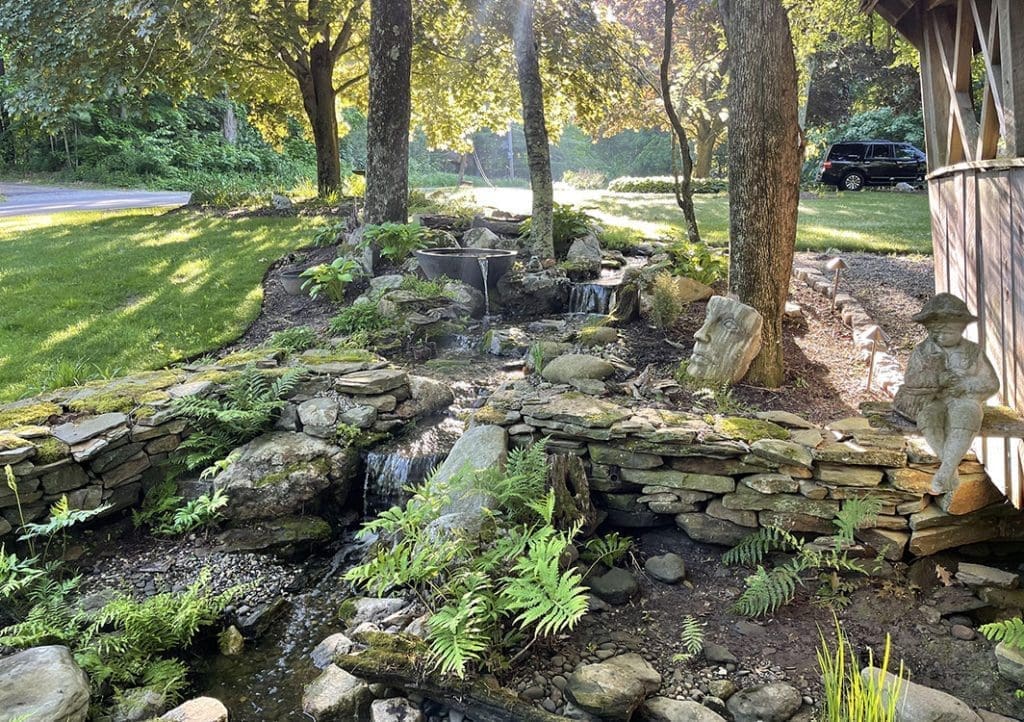
In today’s world, it’s more important than ever to consider the environmental impact of our actions. At New England Aquatic Landscaping, we take this responsibility seriously. As leading “pond builders near me”, we’re committed to an eco-friendly approach to pond building that not only creates beautiful backyard oases but also contributes positively to our local ecosystems.
Sustainable Design
Our commitment to the environment begins with our design process. We aim to create ponds that are not only aesthetically pleasing but also sustainable. This means designing ponds that work with the natural landscape, rather than against it. We consider factors such as the local climate, the existing soil and vegetation, and the potential impact on local wildlife. By doing so, we can create ponds that are a natural extension of the surrounding environment.
Eco-Friendly Materials
We also prioritize the use of eco-friendly materials in our pond builds. This includes using natural stones and pebbles, which have a lower environmental impact than manufactured materials. We also use high-quality, durable pond liners to ensure longevity and reduce the need for replacements.
Supporting Local Ecosystems
One of the most significant ways that our ponds contribute to the environment is by supporting local ecosystems. A well-designed pond can provide a habitat for a variety of wildlife, from fish and frogs to birds and insects. By creating these habitats, we’re helping to support biodiversity and contribute to the health of our local ecosystems.
Water Conservation
Water conservation is another key aspect of our eco-friendly approach. We design our ponds to be as water-efficient as possible, using techniques such as recirculating water systems and natural filtration. This not only reduces water usage but also helps to keep the pond clean and healthy.
Education and Advice
Finally, we believe in educating our clients about how to maintain their ponds in an eco-friendly way. This includes advice on natural pond maintenance techniques, such as using plants for filtration and avoiding harmful chemicals.
At New England Aquatic Landscaping, we’re proud to be more than just “pond builders near me”. We’re advocates for the environment, committed to creating beautiful, sustainable ponds that our clients can enjoy for years to come. So if you’re considering adding a pond to your backyard, why not choose a builder that values not only beauty and craftsmanship but also environmental responsibility? With our eco-friendly approach, you can enjoy your personal oasis knowing that you’ve made a choice that’s good for you and the planet.